

The Swine Study That Could Change Farming
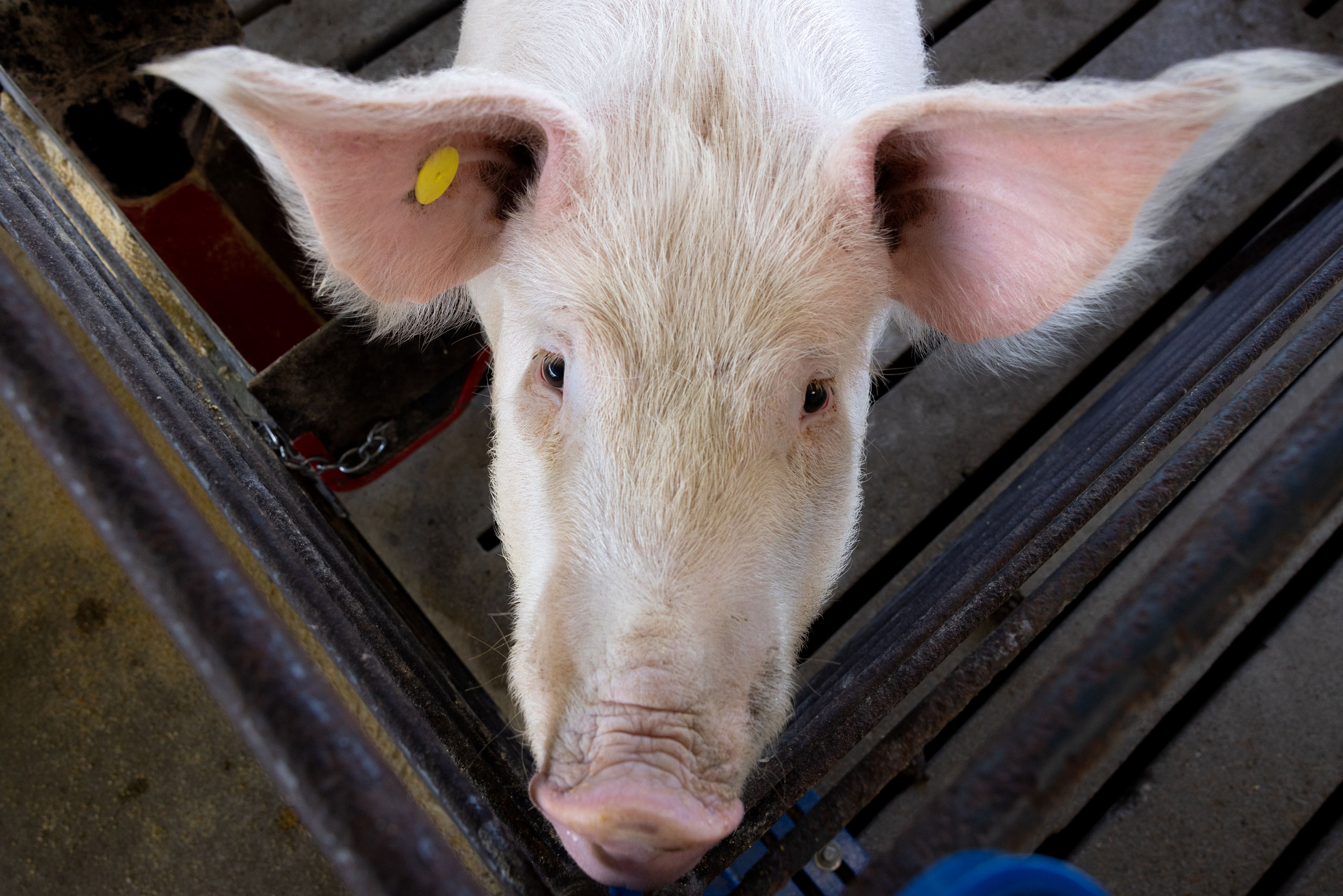
Plant-derived phytochemicals support lasting pig growth and gut health, outperforming antibiotics over time.
Efforts to reduce reliance on antibiotic growth promoters in modern pig farming are increasingly turning to plant-derived essential oils as a promising alternative. These natural compounds may offer lasting benefits for animal health and performance.
A rare long-term public study led by researchers at the Arkansas Agricultural Experiment Station examined phytochemicals from rosemary and oregano alongside traditional antibiotic growth promoters. The findings showed that pigs given these plant-based compounds after weaning developed better gut health and maintained stronger growth over time. The benefits appear to stem from preserving microbial diversity, which improves how nutrients are used.
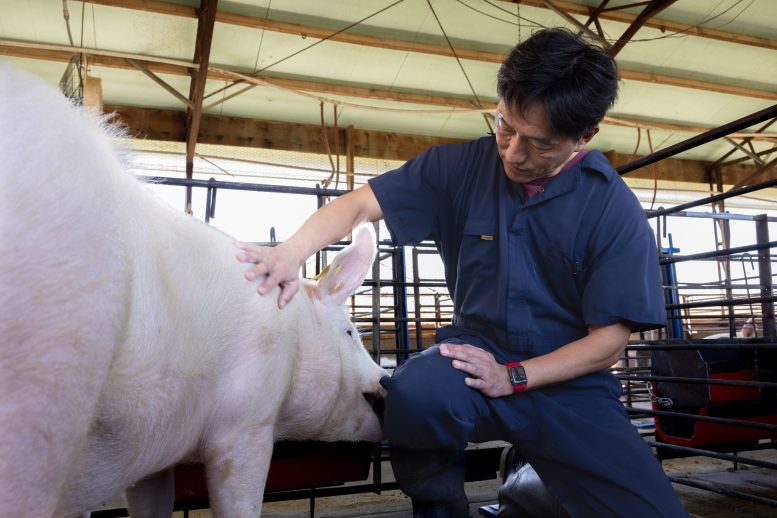
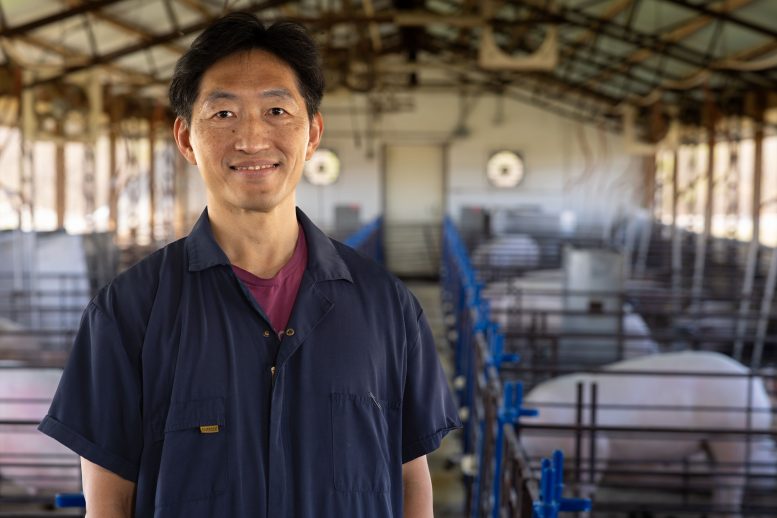
“This study allowed us to look at the lifetime impact from phytochemical exposures,” said Tsungcheng “TC” Tsai, Ph.D., a program associate in the department of animal science for the experiment station, the research arm of the University of Arkansas System Division of Agriculture. “If you just look into the nursery phase—the first 43 days after weaning—and you don’t see any difference, the study is ended, and you don’t really know the true value of those phytochemicals.”
Tsai served as the corresponding author of the study, which was published in Animal Research and One Health.
Concerns Over Antibiotic Use and Environmental Impact
The study included microbiome analysis conducted in partnership with the University of Arkansas for Medical Sciences.
While antibiotics remain important in veterinary care, Tsai explained that their widespread use has contributed to growing antimicrobial resistance, prompting restrictions or bans in several countries.
High levels of dietary zinc are also commonly used to prevent postweaning diarrhea. However, excessive zinc excretion can harm the environment by accumulating as a heavy metal. Since pig waste is often used as fertilizer, this buildup can reach levels that damage plant health.
Previous research has shown that essential oils from plants such as rosemary and oregano can improve animal health across species, including poultry, fish, and pigs. However, most studies have focused only on short-term effects during the early nursery stage.
Challenges in Early Pig Development and Study Design
The period immediately after weaning is one of the most stressful stages in a pig’s life, both physically and immunologically, Tsai said. Sudden changes in diet and environment, along with separation from the mother, disrupt gut development and destabilize the microbial balance. These early conditions can influence feed efficiency, growth patterns, and overall production outcomes later on.
To explore long-term effects, researchers assigned 192 piglets into four groups after weaning. One group received no treatments, while another was given the antibiotic carbadox along with high dietary zinc. The remaining two groups received feed supplemented with phytochemicals derived from oregano and rosemary.
One phytochemical group received oregano extract at 300 grams per ton of feed (about 0.66 pounds per 2,000 pounds of feed), while the other received a blend of oregano and rosemary extracts with sodium humates at 900 grams per ton (about 2 pounds per 2,000 pounds of feed). Sodium humate, derived from sedimentary rock, has anti-diarrheal, antiviral, and anti-inflammatory properties.
To reflect standard industry practices, antibiotics and zinc were used only during the early postweaning stage. In contrast, phytochemicals were fed continuously, allowing researchers to evaluate their long-term effects.
Growth Performance and Long-Term Outcomes
Researchers tracked growth across seven phases, including nursery, growing, and finishing stages.
Pigs that received antibiotics initially grew faster and reached higher body weights, but this advantage faded once the treatments stopped.
By day 155, pigs fed the combination of oregano, rosemary, and sodium humate achieved the highest final body weight and the most efficient feed conversion among all groups.
“From a production perspective, these patterns may offer complementary or alternative strategies for growth promotion, but their implications should be interpreted cautiously,” the researchers noted in their conclusion.
Behavioral and Microbiome Findings
Although not formally measured in the study, Tsai noted that pigs receiving phytochemicals appeared less aggressive toward one another.
Microbial analysis supported the performance results. Phytochemicals improved long-term productivity and helped restore a healthier gut microbiome. Unlike antibiotics and high zinc exposure early in life, they did not cause harmful shifts in microbial composition.
Researchers collected rectal swabs from one pig in each group at multiple time points, including days zero, 16, 126, and 155, to compare microbial changes.
Pigs treated with antibiotics and zinc showed reduced microbial diversity and a higher presence of potential pathogens. In contrast, pigs fed oregano alone had greater levels of beneficial bacteria linked to gut health and serotonin-related development.
Microbial Diversity and Health Implications
“These compounds may not give the instant response producers often see with antibiotics, but over time they appear to help condition the gastrointestinal tract and microbiome, so pigs handle stress better later in life,” Tsai said.
The long-term study was a long time in the making for Tsai, who, as a boy, was intrigued by the different growth rates of the pigs on his grandparents’ small farm. His curiosity continued at the University of Georgia, where he earned his graduate degrees in animal nutrition. He then gained more knowledge of immunology and microbiology as a program associate with the University of Arkansas System Division of Agriculture.
“We come to a point where we know some of the basic mechanisms that can result in the advantage of the phenotype response by certain types of treatments, but the challenge we still have nowadays is that we cannot identify a single solution to all types of production systems that is able to be as effective, in the broad spectrum, when compared to antibiotics. We have to think about customizing, or conditioning production systems to what kind of treatment would probably be better.”
At the Savoy Research Complex in Fayetteville, Tsai observed that each generation of pigs differs slightly in health and performance, highlighting the need for adaptable approaches.
Future Research and Industry Implications
“It’s still a thing that we need to further look into, and see, to learn more,” Tsai said of the phytochemicals. “I think the good thing is that we are in a time that allows us high-end molecular science with techniques we can adapt into the production side, and the nutrition side. We have the people with expertise that we can collaborate with and get the bigger picture or better understanding of what’s going on.”
The findings suggest that farmers have viable natural options to support animal health while reducing dependence on antibiotics, according to Michael Looper.
“It’s an encouraging step toward more sustainable and responsible pork production,” Looper said. “Consumers want food that’s raised responsibly, and this study gives swine farmers more natural tools to do just that. It’s exciting to see options that support animal health while helping produce pork that people can feel good about.”
Reference: “Longitudinal Modulation of the Gut Microbiome and Growth Performance by Phytochemicals as Antibiotic Alternatives in Swine Production” by Ziyu Liu, Samantha Howe, Yang Tian, Alisun N. Watson, Jason E. Farrar, Christopher E. Randolph, Jaime Andrés Ángel Isaza, Álvaro José Uribe, Yan Huang, Michael Looper, Jiangchao Zhao and Tsungcheng Tsai, 6 February 2026, Animal Research and One Health.
DOI: 10.1002/aro2.70054
Randolph and Farrar applied funding from a grant to use the Genetics Core’s Illumina MiSeq machine in the study. Additional support came from Promitec Santander S.A.S.
Never miss a breakthrough: Join the SciTechDaily newsletter.
Follow us on Google and Google News.
Source link
